Whitepaper
The Effects of the War in Ukraine
Russia's invasion of Ukraine has led to political and economic upheavals whose dimensions can already be seen today. Just as the corona pandemic was taking us into a new normal, the paradigm shift in foreign, energy and security policy has now moved the focus once more.
We are facing a highly dynamic situation yet again, which is dispensing with previous certainties and creating new divides. On the one hand, innovation projects are being stopped while, on the other hand, the greater relevance of trends means that companies are quickly having to initiate new innovation measures.
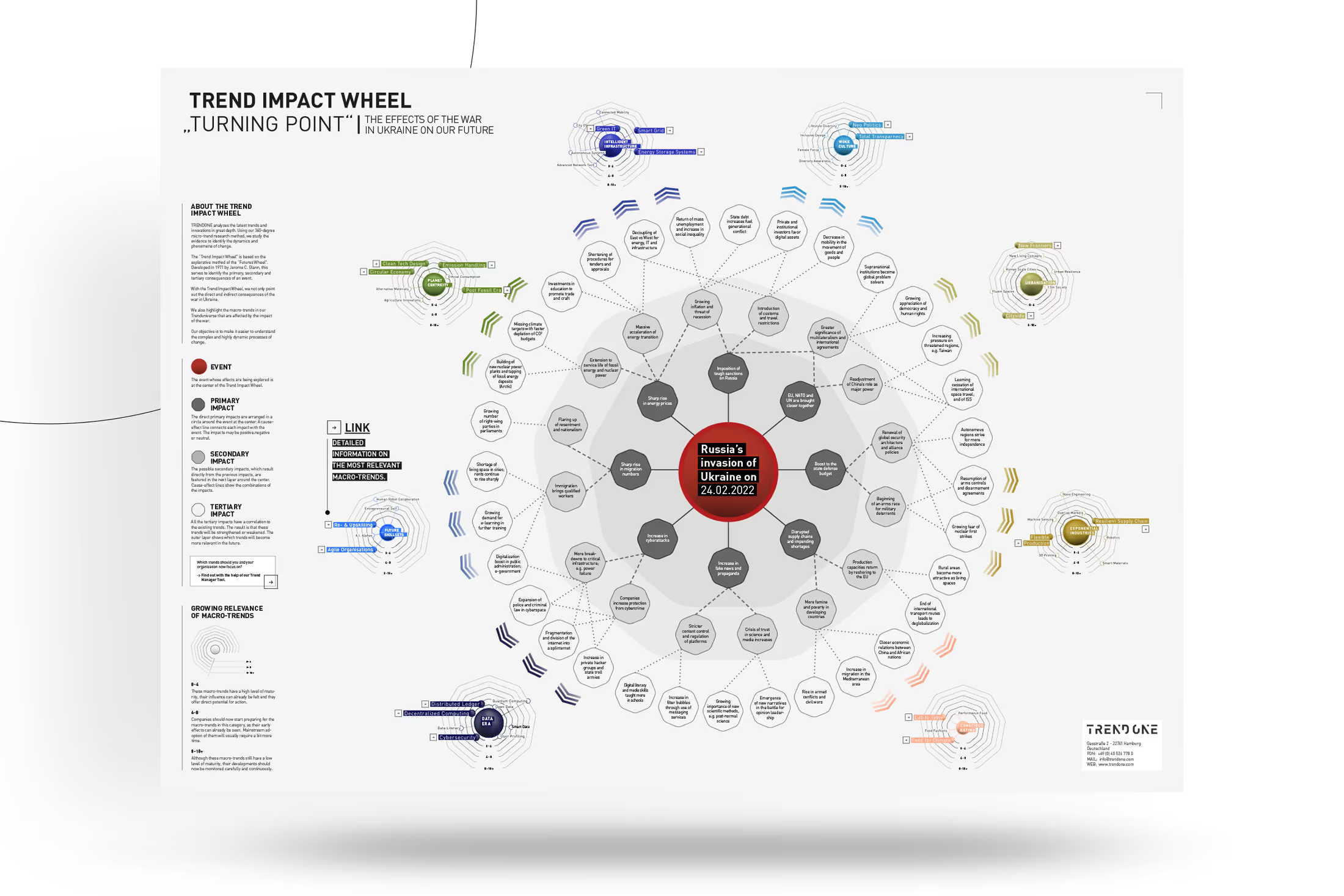
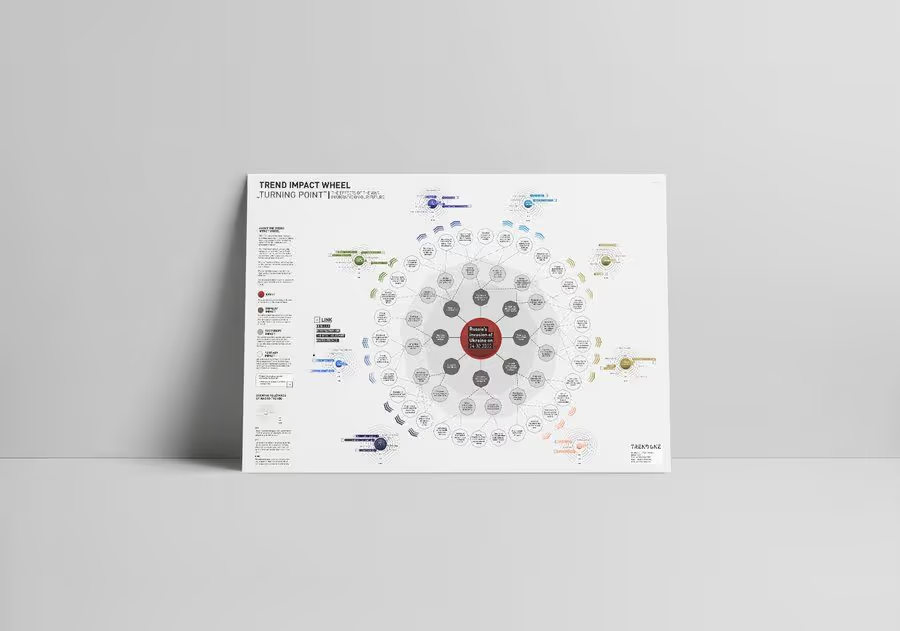
Against this background, what can and must innovation managers prepare for? How can trends whose relevance has increased now be classified? The TRENDONE Trend Impact Wheel visualizes the direct and indirect consequences of the war in Ukraine and explores the potential futures after this turning point.













Trend Impact Wheel: A turning point
Uncertainty about the development of the economic situation is high. In view of rapidly rising energy and raw material prices, the severe disruption of supply chains and the withdrawal of many companies from the Russian market, a complex situation has arisen in which cause and effect are difficult to separate from one another.
The TRENDONE Trend Impact Wheel shows what influence Putin's war has on companies, which trends are becoming increasingly relevant and what innovation teams must now pay attention to.
Methodology: Exploration
The “Futures Wheel” is an explorative method for identifying the direct and indirect consequences of an event. It was developed in 1971 by Jerome C. Glenn. Building on from that with the “Trend Impact Wheel”, TRENDONE highlights the direct effects of the war in Ukraine.
Analysis: Impacts
The event whose effects are being analyzed is at the center of the wheel. The eight primary effects are clustered around the event in the middle. The cause and effect lines show how the effects combine. The secondary and tertiary effects follow in the two outer layers.
Relevance: Trend dynamics
All 56 effects have a correlation to the existing trends. The result is that these trends will be strengthened or weakened. The Trend Impact Wheel displays the most heavily affected mega-trends. 20 macro-trends are in the focus, and their high degree of dynamism ensures a strong level of relevance for companies.
The most relevant macro trends
Resilient supply chain
Supply chains consist of complex, globally networked systems and precisely coordinated processes, which are susceptible to a variety of individual disruptive factors. Even small local errors in a subsystem can bring global supply chains to a standstill. One of the core tasks of supply chain management is therefore the construction of supply chains that are highly resistant to known and unknown influencing factors.
Cybersecurity
Cyber attacks can have different backgrounds. The spectrum ranges from political to criminal to personal motives. Perpetrators are often financially interested. They blackmail their victims with ransomware and demand ransom or steal from banks and companies. The goal is any insufficiently secured system.

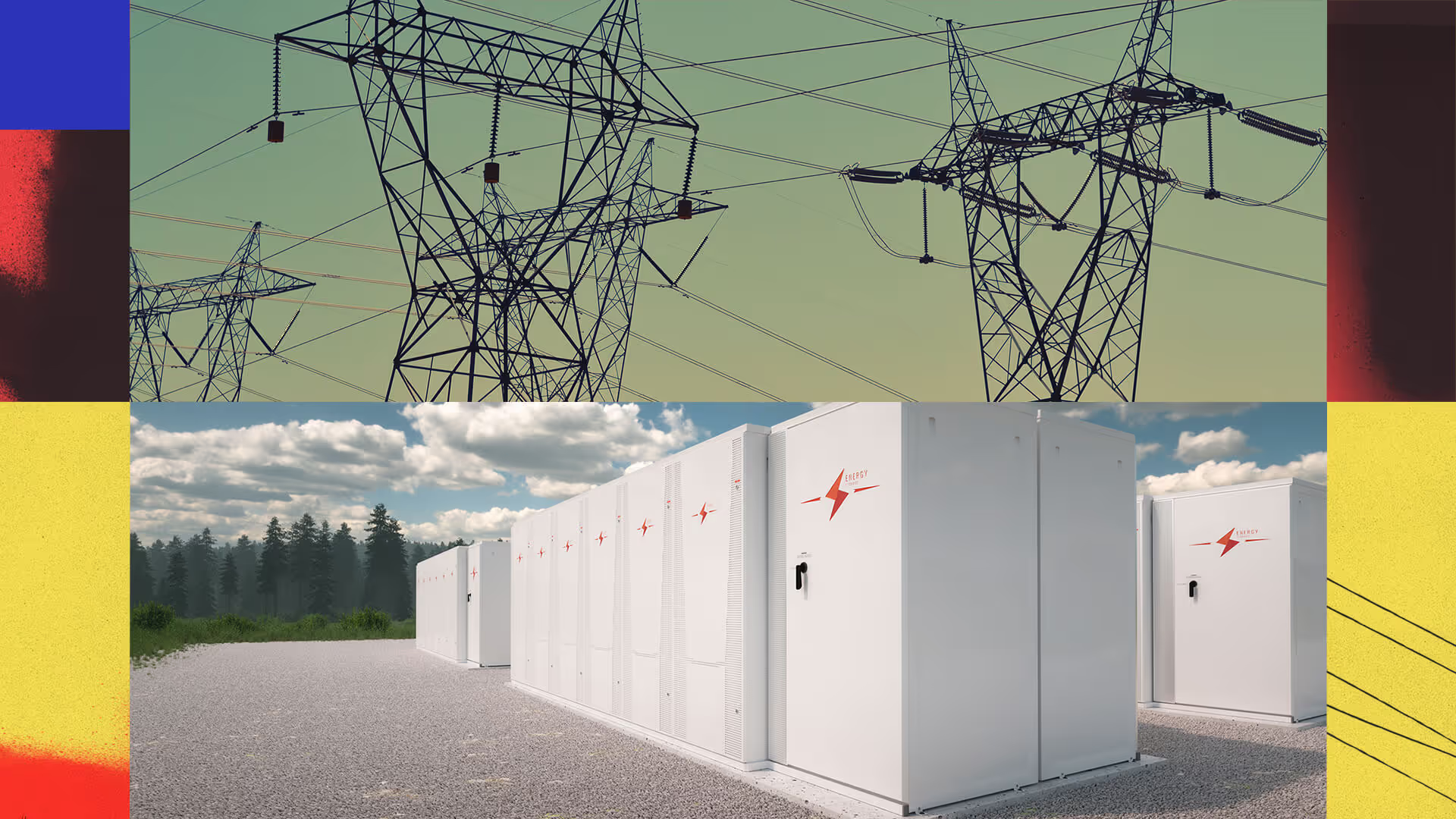
Energy Storage Systems
Switching to renewable energy requires an intelligent power grid. A central component is the storage of electricity. For example, wind and solar energy cannot be produced in line with demand, but only if natural conditions permit. Electricity produced at night must be stored until it is needed.
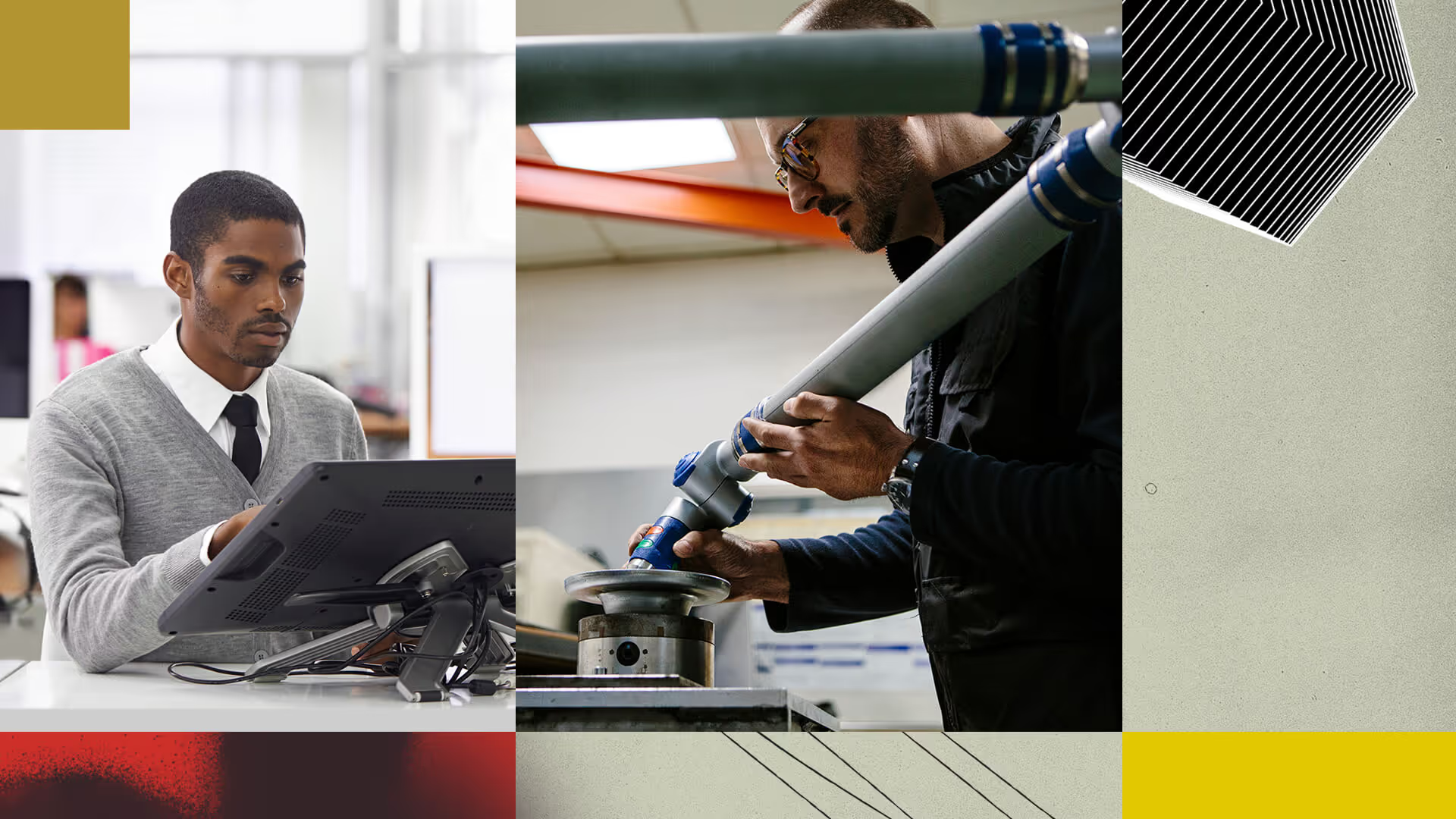
Flexible production
In a fast-moving world with dynamic changes in the demand structure, production systems must be designed from the ground up in a flexible and agile way. Flexible production of goods not only meets this dynamic environment, but can also react quickly to crises.
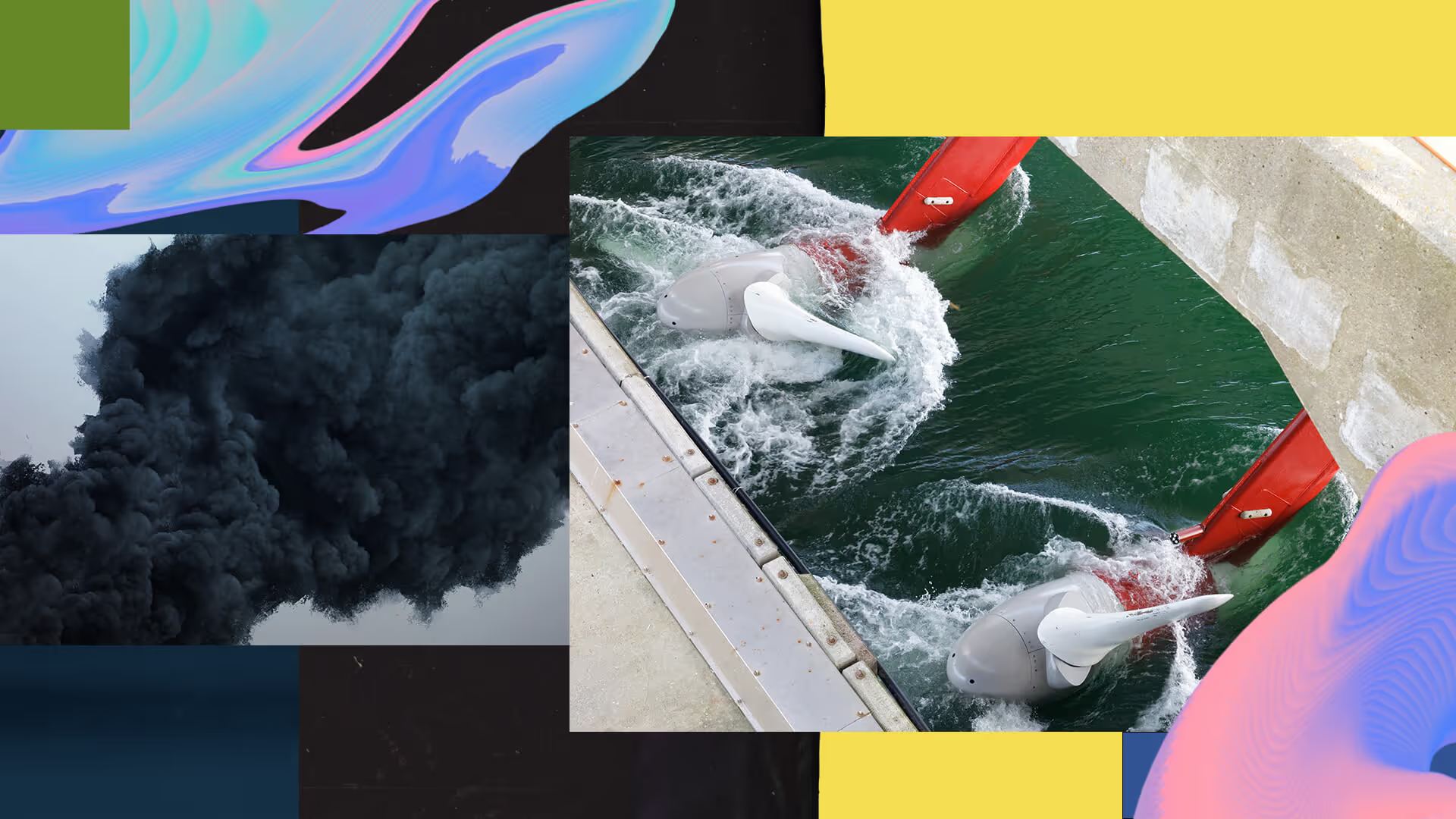
Post Fossil Era
Mining and generating electricity from coal has long since ceased to be profitable in Europe due, among other things, to price pressure from the fuel markets. Climate scientists also regard a coal phase-out by 2030 as essential for meeting the two-degree target.
Neo-Politics
Digitalization is bringing a new wind to political events. Social networks in particular form new platforms for political communication and serve as tools for activism and political movements. Companies and institutions are also expected to position themselves politically in the digital space.

Interactive Impact Radar
Using the interactive TRENDONE Impact Radar, we highlight the effects of the war in Ukraine on selected macro-trends from our Trend Impact Wheel in relation to the mega-trends. Our method categorizes the trends into areas entitled Act | Prepare | Watch where they are clearly classified according to their greatest relevance.
Use the Trend Manager to define your company-specific Impact Radar:
- Work collaboratively in your innovation team to identify and evaluate the macro-trends that are of most relevance to your area of activity.
- By classifying the dynamic consequences of the turning point in Europe, you lay the basis for their visibility, communication and consideration in your innovation work.
- Live-Demo:Live demo: Learn more about our tool for your systematic trend and innovation management free of charge and without any commitments.
Expert interview
Prof. Henning Vöpel, Director of the Center for European Policy (CEP)
TRENDONE: Will the change to the energy policy in Germany lead to even further development of regenerative energies or will the opposite happen by delaying the phase-out of fossil fuels and returning to nuclear power?
Prof. Henning Vöpel: We were on a clear path towards developing renewable energies. And we said we would stop using coal, leave nuclear energy behind and not use natural gas as a bridging technology for energy supplies. We had embarked upon a very strict yet consistent path in the energy transition towards climate neutrality. We must continue along this path.
I think it would be fatal if we now said we were politically required to organize a phase-out of the afore-mentioned phase-outs. To permit the use of coal again and allow nuclear reactors to operate for longer. Over the short-term, that is a way to increase the political pressure enormously, but we should then do that without causing any harm to ourselves. We need to make sure that the sanctions we impose have a high price for Russia and a low one for ourselves.

TRENDONE: Green hydrogen is considered to be a powerful lever in the decarbonization process. Why is Liquefied Natural Gas (LNG) now playing the leading role? Why don’t we switch directly to green hydrogen storage and generation?
Prof. Henning Vöpel: In order to reduce dependence in the short term. We have to admit that the hydrogen business is not quite ready yet. Therefore, we are trying to develop an LNG infrastructure first, or at the same time, which we do not even have in Europe, and certainly not in Germany. But LNG can be organized much more independently and in a decentralized manner. That is why I believe we should do so. But I still see great potential in the green hydrogen business because we will then be able to diversify our energy imports more widely. South America, for example, is making good progress in being able to produce hydrogen in dimensions that would help us to organize our energy transition.
Trend Impact Wheel Turning Point
With this bundled identification and representation of the direct and indirect consequences of the Russian invasion, the TRENDONE Trend Impact Wheel Turning Point makes the complex and highly dynamic change processes visible.
Download the Trend Impact Wheel Turning Point: PDF download (3.3 MB).
Frequently Asked Questions
Ein neuer Megatrend (Quantum Leap) sowie 13 neue Macro-Trends, u.a. Physical AI, The Affordability Gap und Social Health.
Let’s work together to shape your vision for the future



Do you have any topic requests or feedback? Write to us at podcast@trendone.com or send us a voice message via WhatsApp


