Strategic Foresight Setup
Embed Strategic Foresight as an organizational capability













Why foresight projects fizzle out
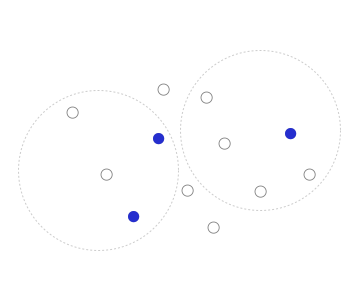
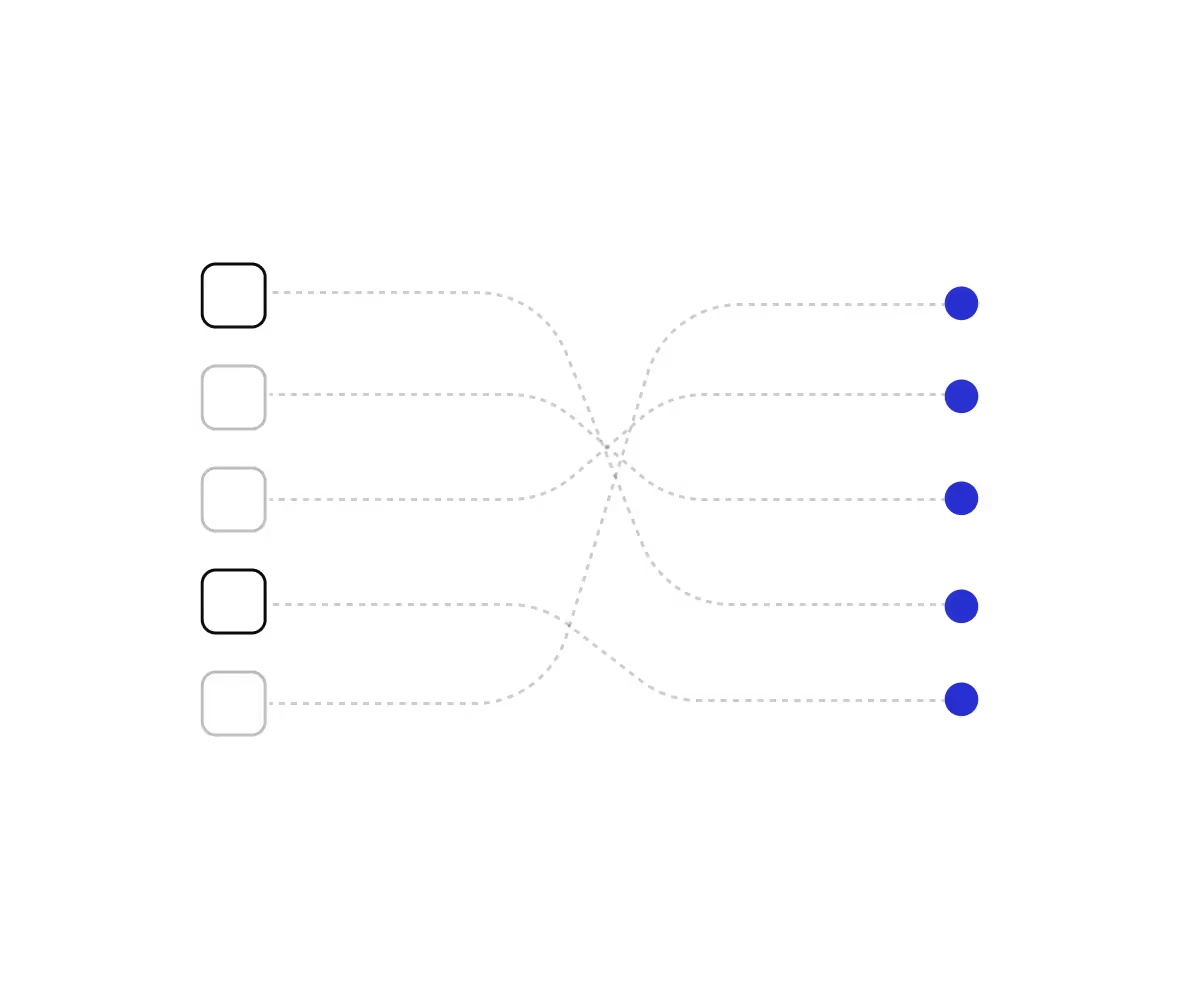
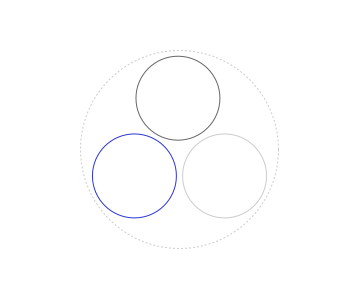
The Approach
From Ad-hoc Foresight to Systematic Competence



What we build


The Setup Project
Five steps to an operational system
How do you currently work with future topics? What processes, tools, and competencies already exist? What works, and what doesn't? Stakeholder interviews and process assessment.
What should foresight achieve in your organization? What outcomes do you expect? How should it be integrated into existing strategy and innovation processes? Definition of goals, scope, and success criteria.
Developing your Foresight Operating System: the trend management workflow (Trend Scouting → Evaluation → Innovation Areas → Communication → Monitoring), roles and responsibilities, tool landscape, control logic.
Setup of tools, team training, piloting of the process. Not PowerPoint, but real application with initial runs and adjustments based on learnings.
Roll-out to the organization. Completion of initial review cycles. Optional: Ongoing sparring and support for continuous optimization.


What sets us apart
Why our setups actually work
Project Example
Semperit: Strategically embedding Corporate Foresight


When is Strategic Foresight Setup the right approach?


When other approaches are a better fit:

Future Research
Strategic Scenario Planning

Trend Manager Platform
Frequently Asked Questions
Future Research provides unique trend analyses. Strategic Foresight Setup builds a durable system. Both can be combined: First research as a pilot project, then set-up for anchoring.
Typically 3-6 months, depending on scope. A focused basic setup takes 8-12 weeks. More comprehensive setups with multiple areas 4-6 months. We clarify the exact time frame during scoping.
Not necessarily. If you've already done Foresight projects, let's start with the setup right away. If you're new to foresight, we recommend a pilot project first. This creates quick wins and shows how foresight works in your organization.
Usually yes. We configure the TrendManager as a central platform for your foresight system. Alternatively, we integrate it into your existing tool landscape.
Basically yes. However, we recommend a digital platform to systematically manage trends. Experience shows that without a tool, Foresight quickly becomes Excel lists and PowerPoint decks again.
They operate the system independently. That is the goal: Empowerment, not dependency. Optionally, we provide sparring and support for continuous optimization.
It depends on your foresight ambition. If you want to anchor foresight as a strategic competence, yes. If you want to observe trends occasionally, the trend manager is a better way to start.
Ready for systematic future work?