
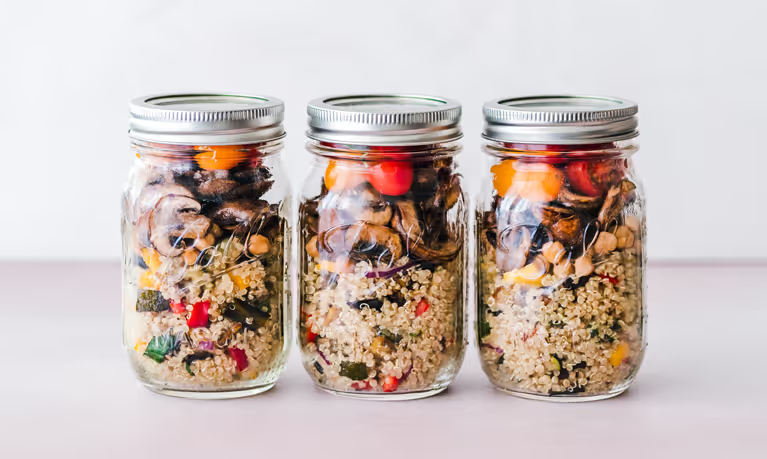
Zero Waste—under this banner, lifestyle bloggers around the world share a wealth of tips and tricks on reducing waste. Smart start-ups pick up on green topics for their business ideas. Recently, five students from Stuttgart teamed up to tackle the problem of food waste. After a long search, they finally found a place where they could pass on food rescued from the bin. In the community garden attached to it, they also bring nature closer to city dwellers again.A paradigm shift is taking shape here, putting Zero Waste at the heart of corporate action. Even more established corporations are recognizing how important the trend is for us and our environment. The following examples illustrate this.
Supermarkets fight waste and test packaging-free options

The largest Dutch supermarket chain Albert Heijn has introduced electronic price tags that adjust the price automatically. The goal is to ensure that no expired food remains on the shelves at closing time. And in Oxford, a branch of British supermarket chain Waitrose offered unpackaged fruit and vegetables for three months. Waitrose is the largest employee-owned retailer in the UK, with a total of 350 stores.
Major manufacturers shift to packaging and containers without single-use plastic
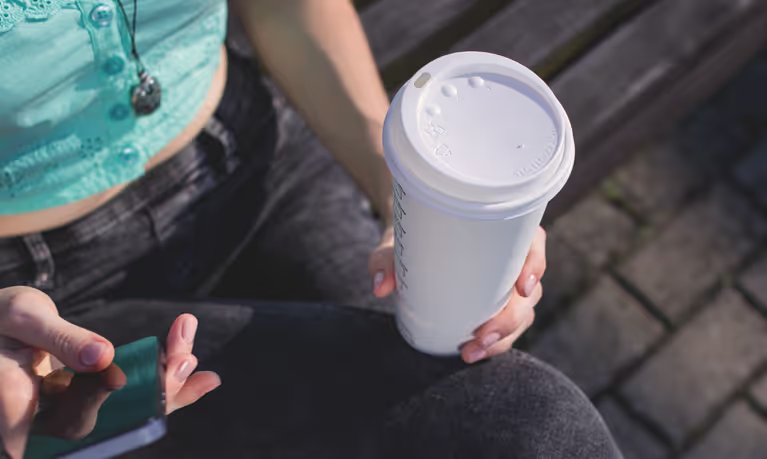
One of the world's largest consumer goods manufacturers, Unilever, plans to use only reusable or compostable packaging from 2025 onwards. "Seventh Generation" is the manufacturer's first brand whose bottles are made 100 percent from recycled plastic. Beverage manufacturers are also rethinking environmentally friendly packaging. PepsiCo, with its "Beyond the Bottle" initiative, has targeted single-use plastic in its supply chain. Alongside the Pepsi brand, the corporation is also behind many other products and is the world's second-largest food manufacturer.To-go coffee cups have until now been a major source of waste. The international coffee chain Starbucks is now looking for solutions. At a store at Gatwick Airport, customers can order their coffee in a reusable cup. The cups can be returned at a total of five locations. Starbucks operates more than 30,000 stores worldwide.
Zero Waste: many more examples in our trend database
The fact that even major players in global consumer culture are now rethinking and moving toward Zero Waste is an encouraging sign for a megatrend that keeps gaining strength. You can find many more examples in the Trend Manager.TRENDMANAGERYour edge in working with trends
With the Trend Manager, you create the content foundation for strategically grounded innovations.