

The current energy crisis shows how suddenly an entire industry can be turned upside down. Within a short time, energy companies have to face unprecedented problems. New solutions and ideas are needed not only to stabilize energy supply but also to secure the survival of the companies involved. The establishment of so-called Innovation Ecosystems—productive collaboration with companies, ideally outside their own industry boundaries—plays an important role here. Combined with Foresight methods that develop scenarios for possible "futures," paths to entirely new strategies emerge.
Energy companies: ambivalence between inertia and innovation capacity
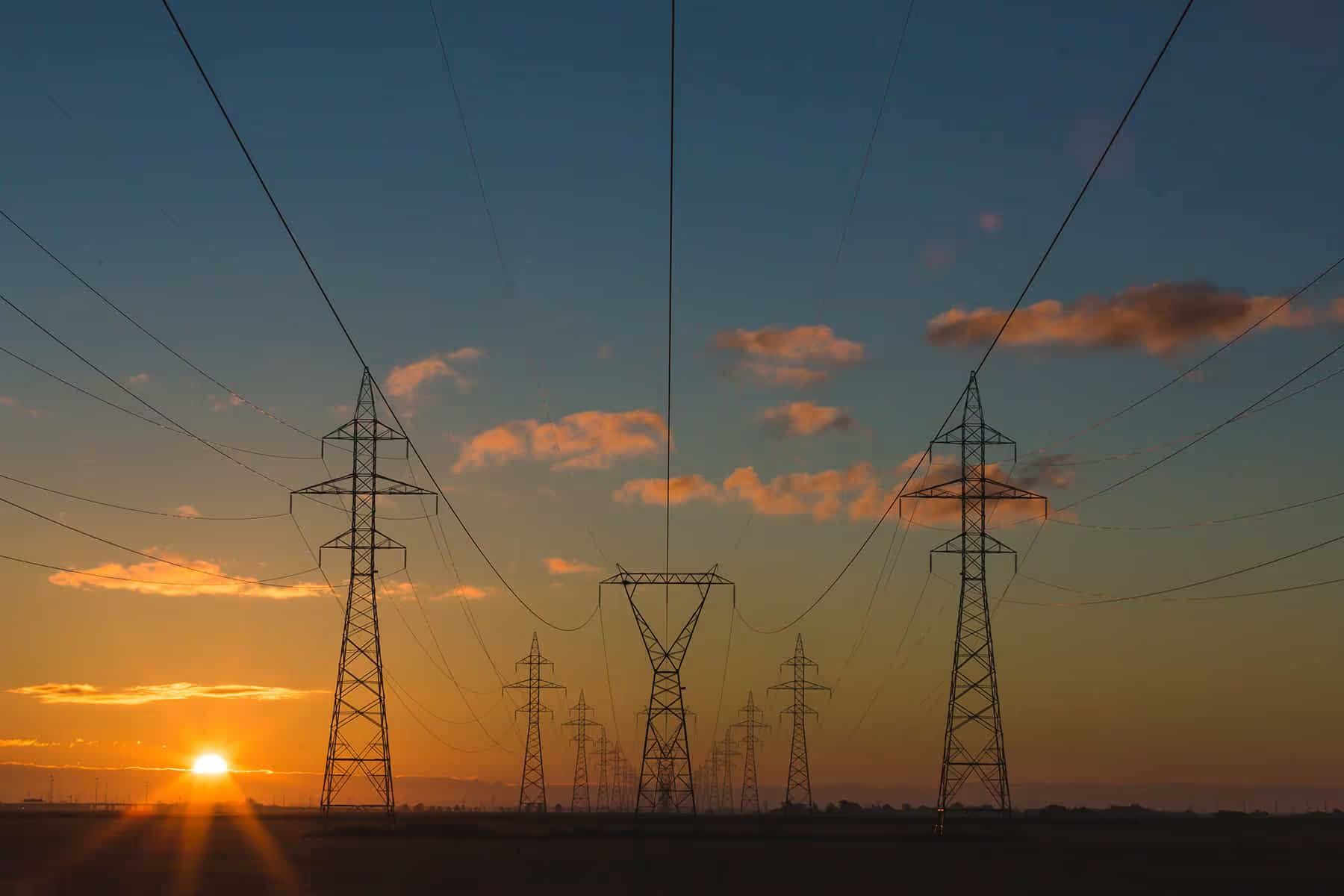
A closer look at the energy sector reveals significant ambivalence between conservative processes and mindsets on the one hand, and a general willingness to innovate on the other. In interviews, experts acknowledge the (innovation) efforts being made by mostly very large energy companies and start-ups. At the same time, they point to the inertia and entrenched processes, especially in small to medium-sized energy companies. Add to that the many regulations and standards that significantly shape the energy sector as critical infrastructure and, above all, slow down its capacity to innovate.
Exchange with unfamiliar know-how fuels creativity

Suitable partners should be chosen specifically from outside one's own industry boundaries.
One way to counter these shortcomings is to establish Innovation Ecosystems. The aim is to work with new—perhaps even unconventional—partner companies to develop a new value proposition based on customer needs. This makes it possible to leverage synergies to design innovative products or business models that could not have emerged alone. Choosing the right partners should specifically reach outside one's own industry boundaries, as the exchange with new and unfamiliar know-how sparks creativity and fresh thinking.
In general, "industry silo thinking" is considered outdated and is being replaced by the cross-industry mindset. This leads to a new kind of corporate collaboration and process design that holds many opportunities for the future—both for the emergence of innovation and for the general structure of companies.
Foresight and Innovation Ecosystems pursue the same goals
Foresight and Foresight methods support the design of Innovation Ecosystems. Both concepts pursue the same goals: differentiation from competitors, which is becoming ever more important in a dynamic business environment, and securing the long-term existence of the company. To get there, companies need to redefine their own strategy and derive operational measures from it. This includes developing a shared vision, choosing suitable partner companies, and identifying potential challenges.
The energy transition requires structural change from business, politics, and society.
For the energy sector in particular, new solutions could emerge here that drive innovation capacity forward despite stringent regulatory requirements. Beyond the energy crisis, this industry has been dealing with the energy transition for some time—an undertaking that likewise demands structural change from business, politics, and society. One solution is sector coupling, which goes hand in hand with the cross-industry mindset. Energy companies must absolutely prepare for this cross-industry shift if they want to stay competitive in the future.
Prerequisites for successful design
The concept of Innovation Ecosystems combined with Foresight is promising and can deliver substantial value. However, certain prerequisites must be in place for its design to succeed. The high costs and significant coordination effort require corresponding resources, which not every company can shoulder equally. A clear "role allocation" among partner companies is therefore essential.
The high costs and significant coordination effort require corresponding resources.

A prerequisite not to be underestimated—and possibly the most important one—is people themselves. The culture and mindset of those involved can have a decisive impact on the outcome of collaboration, whether in an Innovation Ecosystem or in a Foresight methods workshop.
No Innovation Ecosystems without an open mindset
Interpersonal relationships and people's openness are ultimately at the core of new ideas and the driver of change. An open mindset also fosters a company's willingness and ability to collaborate, without which an Innovation Ecosystem cannot come about. This openness on a human level and creative collaboration with cross-industry partners not only strengthens a company's innovation capacity but also secures its standing in the markets of the future.
Success story: strategic innovation work at EWE

As an energy service provider, the EWE Group faces enormous challenges in delivering the best future-ready solutions for its customers. With the TRENDONE Trend Manager, EWE has created the foundation for group-wide trend and innovation management and built a lively trend community within the company. Read the full success story…