
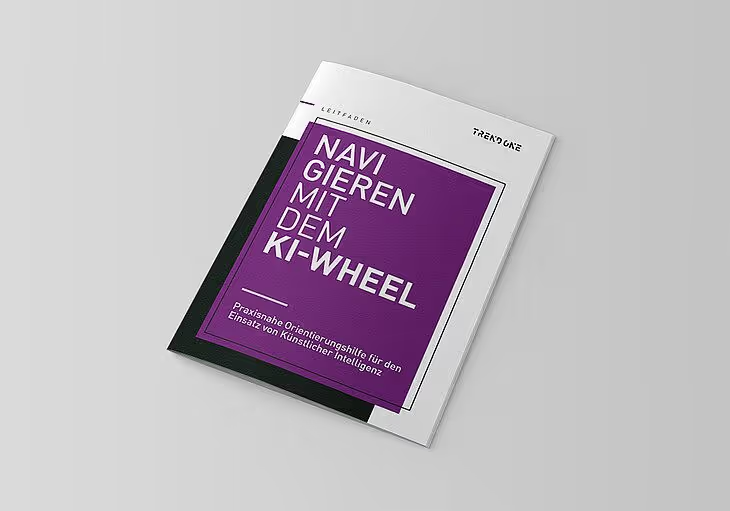
AI is no longer a vision of the future—the technology is here, available, and evolving rapidly. However, we see that current developments and the resulting decision pressure are overwhelming many companies on multiple levels. What is clear is that progressive action is needed now. But many face the question: where and how to start?
With our guide, we provide an orientation aid for the complex AI landscape. The AI Wheel offers an overview designed to support you in the practical use of AI and in strategic thinking. The Wheel is the result of clustering numerous AI trends and the most promising use cases from the past 2 years of our research and consulting work.
The AI Wheel comprises 7 AI application areas that serve as initial orientation. For each application area, we have mapped 3-4 practical approaches for putting AI to work. At the center of the Wheel sit the 6 most important technologies required to deliver specific applications.
Download our guide now to explore the AI application areas, approaches, and technologies, identify potential use cases, and understand the steps to implementation.
AI as the most important technology trend of 2024+
For an AI strategy to unleash its full potential and create real value for your business, it must be tailored specifically to your business needs and goals.
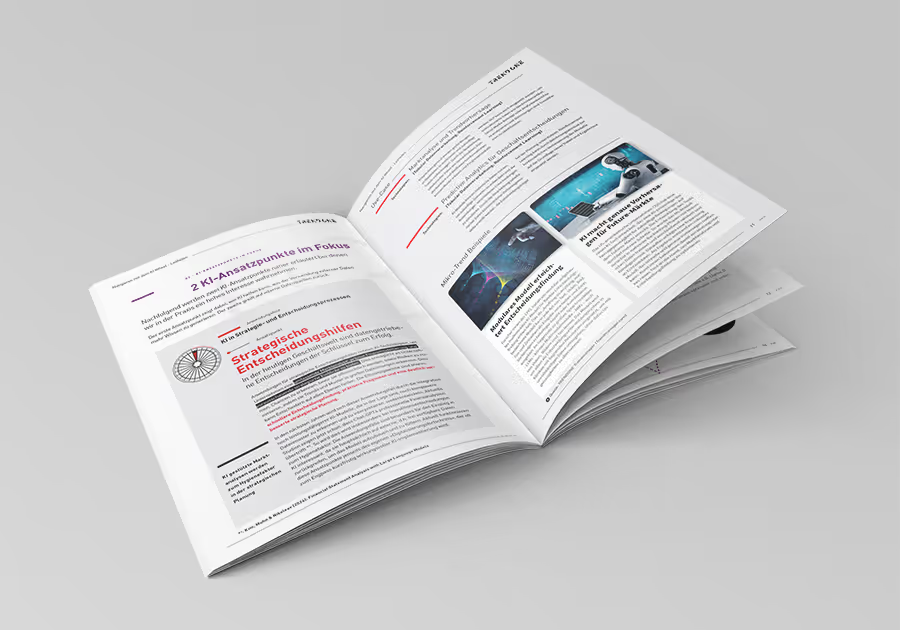
AI Wheel
- Overview of relevant AI application areas
- Concrete AI approaches visualized
AI approaches in focus
- Deeper understanding of two approaches
- Specific use cases with technology context and best-practice innovation examples
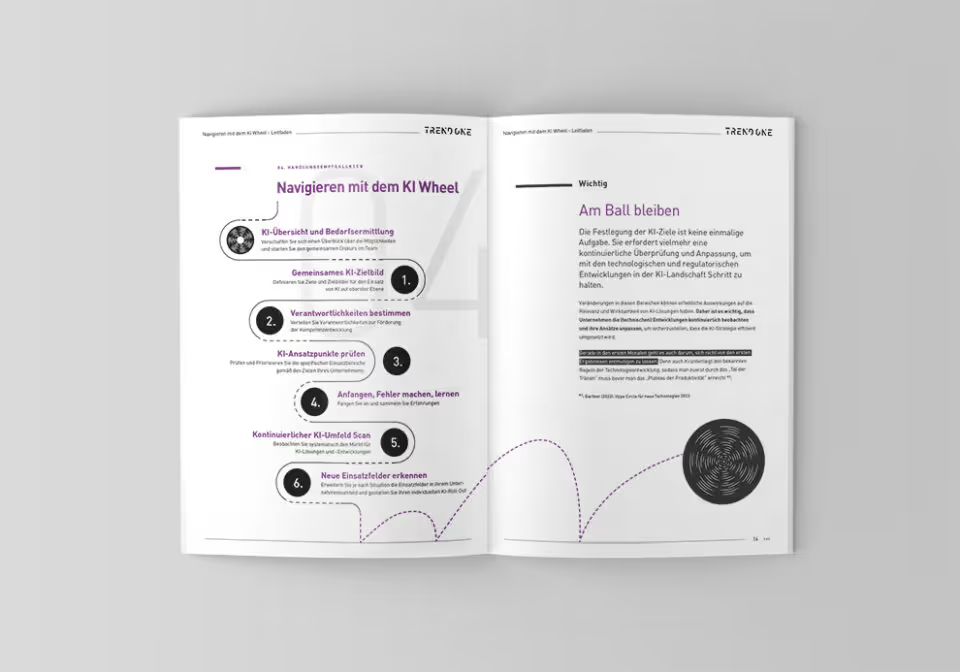
Recommendation
- Concrete recommendations in 7 steps
- Tips for getting started
On the threshold of a disruptive era
AI is the most important and most transformative technology trend of modern times.
AI in innovation and development
Optimizing and accelerating R&D activities
AI in strategy and decision-making
Improving decision-making capability and confidence
AI in the (human) workplace
Improving human work and collaboration
AI in sustainability and ethics
Promoting ethical practices through better resource management and climate intelligence
AI-powered customer engagement
Simplifying and personalizing customer experiences and optimizing customer lifecycle management
AI in operations
Improving operational efficiency through process automation
AI in hardware and computing
Boosting performance through efficient and targeted use of AI